How and why does my mind limit me — and what can I do about it?
That question followed me everywhere. It followed me through university, where I first started studying psychology. It followed me through a decade of exploration geology — field mapping, complex data interpretation, genuine adventure in some of the world's most remote places. A career I genuinely loved, and one that taught me more about resilience, independent thinking, and operating far from comfort zones than anything else could have.
But geology couldn't answer that question. Psychology could.
So after a decade, I came back to where I started — and this time I stayed. A diploma in counselling, a certificate in sports psychology, and I'm currently completing a graduate diploma in psychology.Not a quick pivot. A genuine, years-long return to work that I find genuinely fulfilling — and where I have a lot to give.
The mind is trainable. That sounds simple. It isn't obvious.
Most people assume they are the way they are. That their beliefs about themselves, the way self-worth crumbles after a mistake, the patterns of thinking and behaviour that hold them back — that's just who they are. Fixed. Wired in.
It isn't.
I've learned that we can train how we think, how we feel, and the story we tell ourselves. Self-worth doesn't have to be attached to outcomes. You can be enough right now — genuinely — and that sits completely separately from still wanting to improve and chase hard goals.
When I started thinking in AND rather than OR — I am enough AND I want to improve, I can fail AND still be worthy — the black and white thinking started to loosen. What felt like two opposing truths turned out to be two things that can exist at the same time.
What I was capable of felt limitless — and I realised it had been my own mind and beliefs that were holding me back.
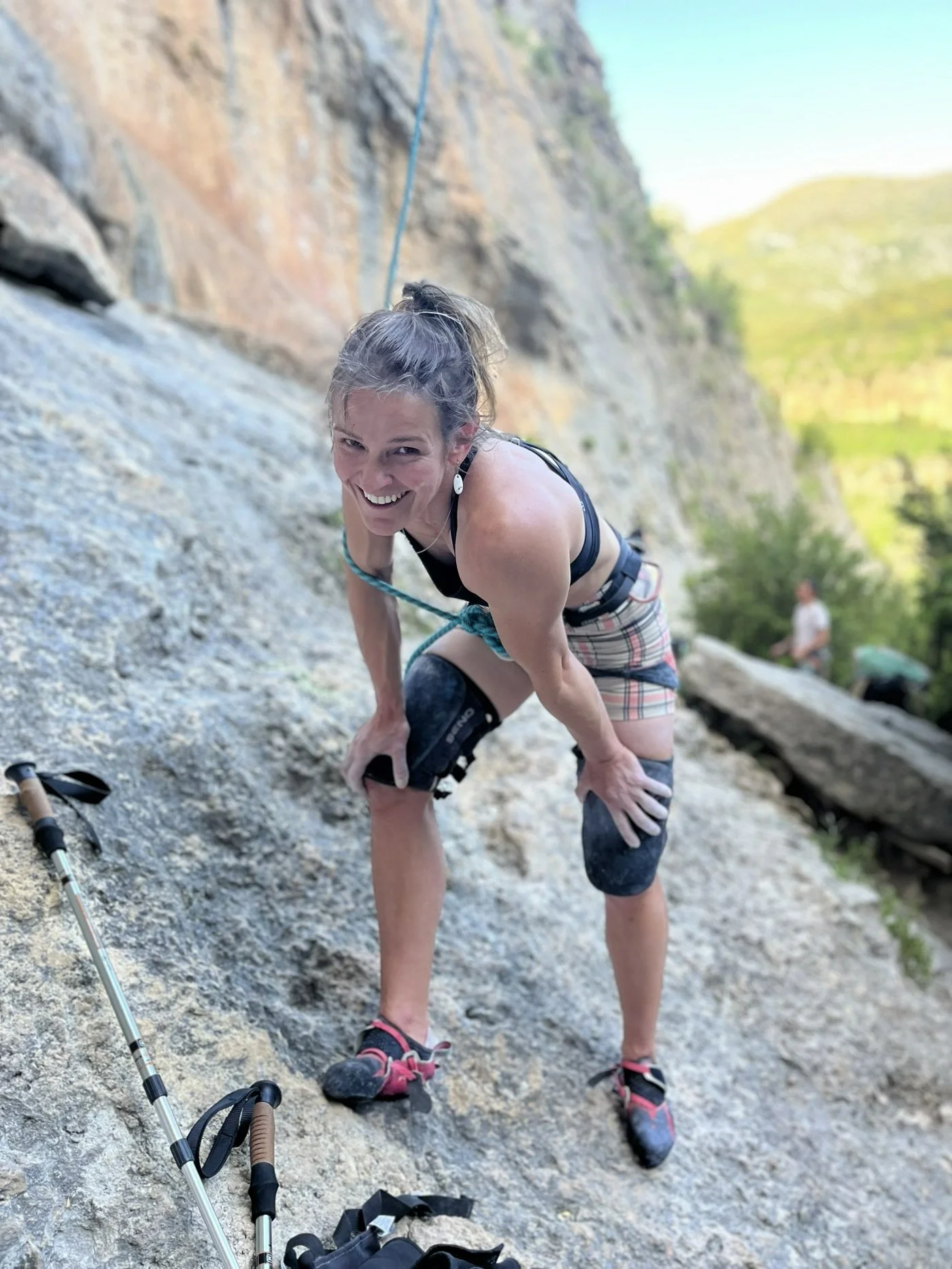
I grew up around climbing but didn't get seriously hooked until my early thirties. I came in with an identity that wasn't reliant on performance — a mental foundation that wasn't easily swayed by a run of failures or things feeling hard.
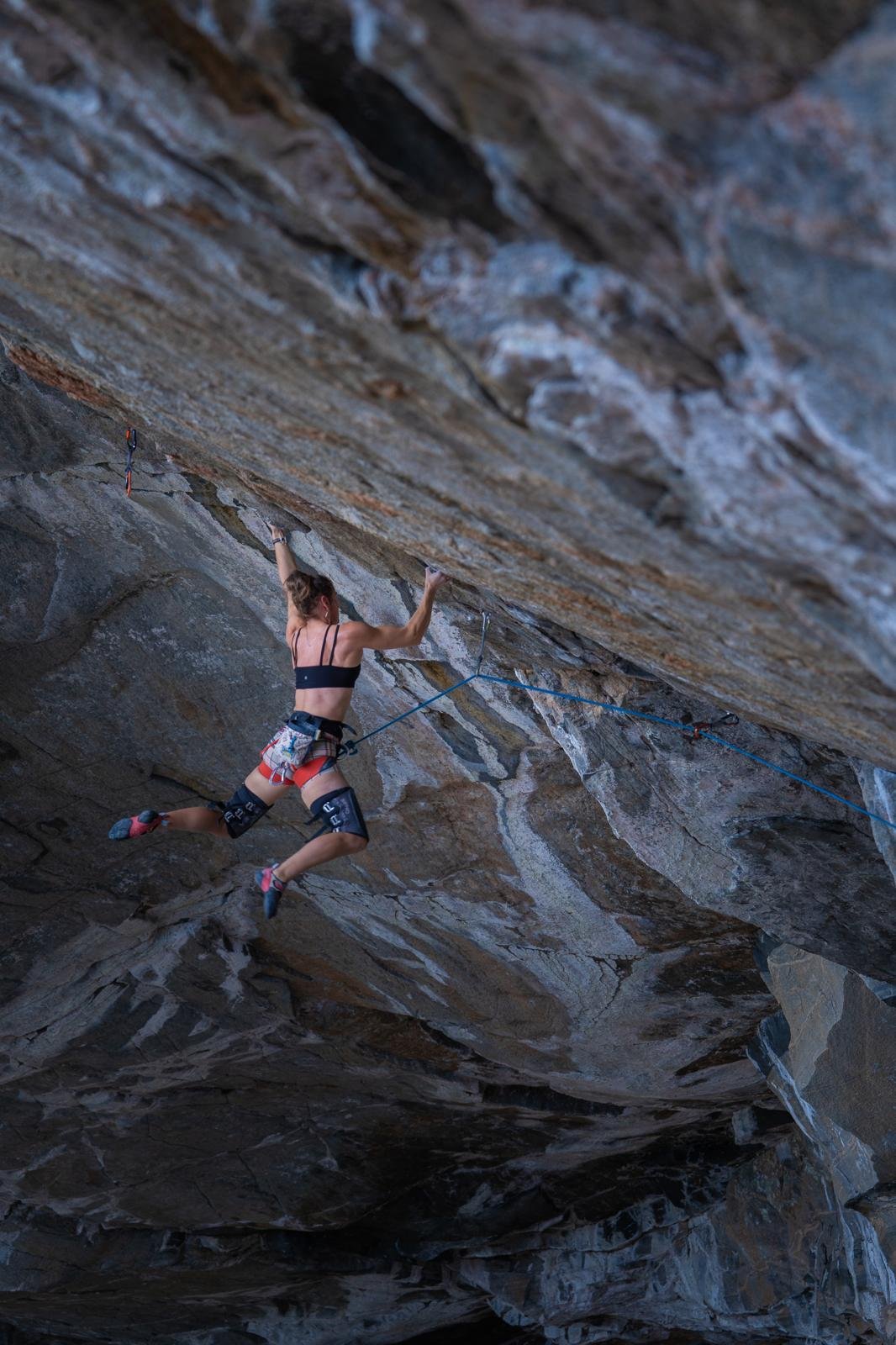
Since then I've climbed across sport, trad, and ice — in Australia's Blue Mountains where I'm from, and across South America, North America, and Europe, where I'm now based in Spain.
Before climbing, I competed in orienteering at national and international level, played football at state level, and have spent time in trail running. I understand from the inside not just what pressure does, but what the mind can do to either support or completely derail performance.
I'm in the process myself — the attempts, the setbacks, the recalibration, staying in the uncertainty and with the doubts without letting the outcome define how I feel about myself. When we talk about what happens in your head under pressure, I'm drawing on that directly.
I came to climbing late. It didn't matter — because I didn't arrive needing it to define me.
Why I work the way I do
The athletes who perform consistently under pressure aren't the ones with the most tools. They're the ones with the most stable mental foundation — a clear sense of values and identity, and self-worth that isn't contingent on outcomes.
Tools matter. But tools built on an unstable foundation don't hold when the pressure is real. So we build the foundation first. Then layer in everything else.
It's structured. It's measurable. It's training.
Working Together
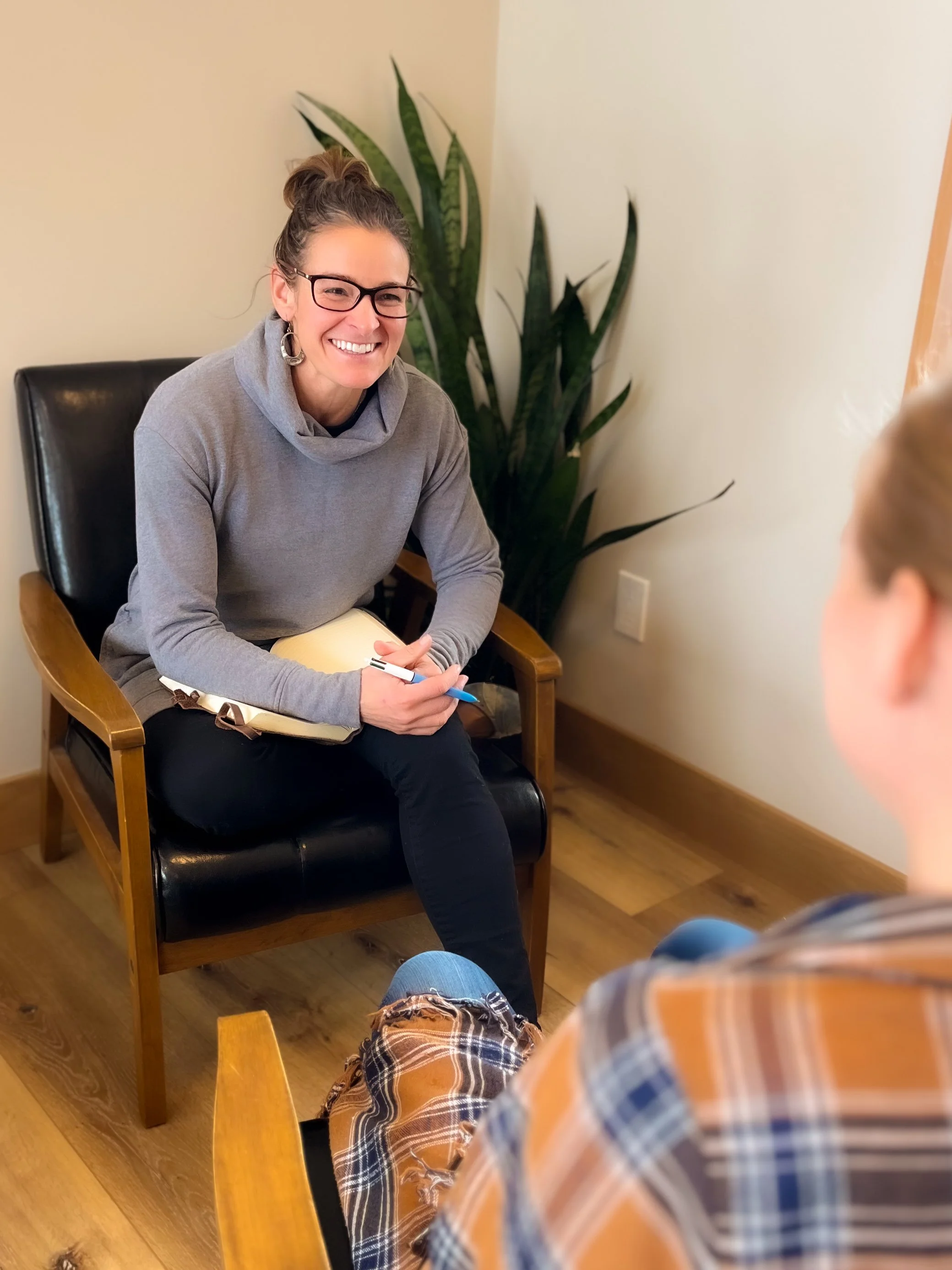
I work with climbers and athletes online and in person — through one-to-one sessions, group programmes, and courses.
I may or may not be the right person for you. But I'm confident that between us, we can work out the best next step for you, whatever that looks like.
Background
Diploma in Counselling
Certificate in Sports Psychology
Graduate Diploma in Psychology (in progress)
Competitive athlete: orienteering (national & international), football (state level), trail running
Climbing: sport, trad, boulder, ice — Australia, South America, North America, Europe
Based in Spain, working online and in person globally